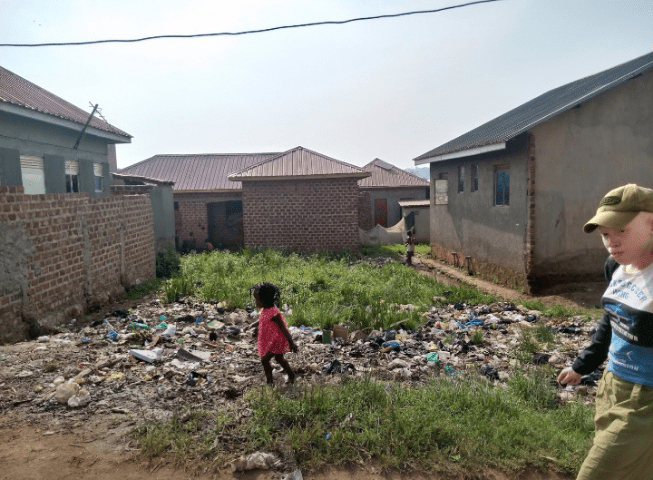
For over the years, there has been an increase in the number of people dwelling and carrying out different human activities in wetlands. This has stood as an underlying driver to wetland degradation.
A mass of wetlands have been henceforth cleared for different reasons for example, wetlands in Kinawataka near Lake Victoria are being cleared, for industrial development, others along Salaama road have been demarcated for road construction and in Wakiso settlements are mushrooming in wetlands. Despite their importance, the wetlands could be no more within days if urgent measures are not taken to stop the encroachment.
In the move to protect this ecosystem, different organisations and climate change activists have come up to fight against the vice. Amongst these is the Uganda Coalition for Sustainable Development (UCSD) an NGO Network that is committed to promote sustainable development as agreed at the global level.
According the Programme Manager at UCSD Mr Richard Kimbowa there way of promoting sustainable growth is not necessarily through carrying on different projects, but through information sharing, experience sharing and advocacy within and across the world. The organization comprises of forty (40) members that are actively involved sustainable development activities such as The community forestry, wetland conservation, sustainable agriculture and more. The members share the gospel of sustainable development and their expriences online through the different social media outlets. UCSD as well has a news letter dubbed (The East African SUS watch E bulletin) that is let out every month. This news letter comprises of different stories, expriences and achievements shared by various members from different East African countries in the bid to promote sustainable development. http://www.ugandacoalition.or.ug/?q=e-bulletins
Achievements.
Through information sharing, Richard is glad that there are different achievements yielded such as the Discussion around Lake Wamala to be turned designated as a Ramsor site of impotance (wetland of importance) is taking course. UCSD together with Kikandwa Environmental Association for the past 10years took on the mantle of doing research and different documentation around Lake Wamala.
“This was pushed for years ago with different partners. I am glad that it’s now happening gradually. People around are now inquisitive on how to get through the process. They now appreciate that wetlands are part of sustainable development in one-way or another. Individuals around East Africa are also inquiring on how those involved in sus development are doing it and how they can adopt to these measures. This makes me glad.” Richard exclaimed.
On the other hand, UCSD has made a number of inputs to different policies and programs with in Uganda and across East Africa. The organization implemented a watch dog project on Lake Victoria.(LVEMPII) Lake Victoria Environment Management Project and together with the East African community, UCSD worked upon the Lake Victoria Basin Commission bill that had been hanging for years was eventually passed in 2020. The Organization has as well worked upon the Climate Change Policy in turn has been adopted by Heads of State.
“The Climate Change Policy was not known until UCSD made a popular version of it both in simple English and Swahili. So we can also be glad that we did that together with other Members in Kenya and Tanzania.” Says Richard
Lake wamala in Mityana district was designated as a site of importance through the effort of UCSD and other members organisations like Kikandwa Environmental Association.
Discussions on wetland restoration and sus development are being generated across East Africa and within through information, research and documentation shared by UCSD. This drives members into taking action.
Challenges.
However, what agitates Richard is that degradation goes on a rise day by day. Wetlands are being lost at a very high rate regardless of the input that they incur. Law enforcement is weak and wetlands are being demolished. Richard continues to attribute the capacity of communities that is liked with poverty as another key driver towards degradation. Many individuals are still stuck in mining natural resources.
Limited knowledge about wetland policies and plans amongst individuals and custodians of these policies has also led to mass destruction of wetlands. Technical capacities and skills on how to conserve these resources still remain unknown. Richard suggests that if these skills or knowledge are made known to the parties responsible then conservation other than destruction will be enforced.
Why Dwell In Wetlands?
In relation to the question on why Dwell in wetlands, Nagawa Justine a resident of Masajja kisangani, a swampy area seemingly not bothered by
her stay in the wetland said,
“In the struggle of making ends meet this was the only
place I could afford to lay my jaw. The previous plot owner sold it to me and my
husband at only 3million shillings. We then managed to put up this temporary wooden
house to cut down the rent pressure we had in our previous home.”
When I asked her if
there has been any eviction from wetlands by the authorities. She plainly explained, that
during the sale and purchase of any piece of land, it is the local council chairman that
concludes the process for he is responsible for stamping the agreement as well as signing
on it which renders the sale of the land valid implying that the local council authorities are
well aware of their stay in these areas. She continued, “
“This wetland doesn’t belong to
the government, people say that this land belongs to the Kabaka and there is no
problem people settling and operating business from within. Plot owners just offer an
agreement after payment. There is no land title to it. People are putting up permanent
structures. There is even a school being built.”
(Sound clip) Middle men and Government officials claim that land sold in wetlands belongs to the Kabaka
The Cost of Dwelling in wetlands.
However, although Justine feels comfortable about her stay in these areas, nature still has to
take its course. She tells you what it feels like to stare down an impending disaster when the
rains come. Wind whips wildly and water gushes from nearby hilly areas generating waves
in the wetlands. This water forces its way into her house and at this time they liift the home
apparatuses up so as not to go with the water flowing. She and her family are then forced to
seek refuge on the dry land till this disaster passes. “It’s a hard life to live. At times the
waters come along with dangerous reptiles like snakes” Justine explains
The cost of living in wetlands
Just imagine how life gets difficult for Justine’s community. But even at this verge landlords
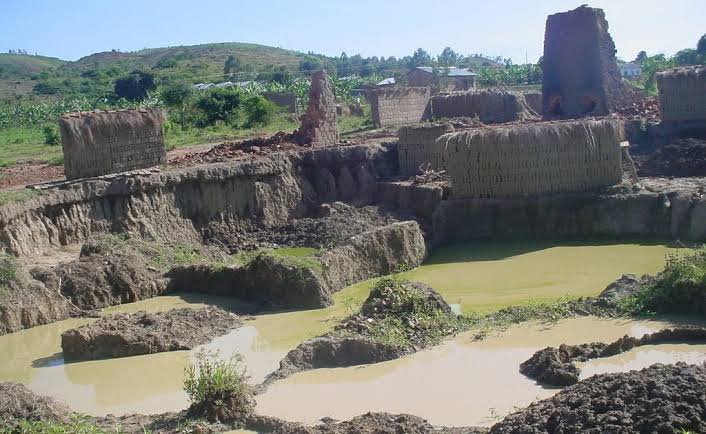
still sell off plots in wetlands, different individuals carry on with crop cultivation, brick laying,
industrialisation as well as settlement. Rushing flash floods come during the rainy season
ruining standing crops, destroying property and taking lives. It’s costly for one to put up a permanent structure for he/she has to first work upon
purchasing soil which is used to lift the foundation, buy stones and other building materials
that avoid water from penetrating into the building. This might be hard for Justine and some
of the community members but not for those that have financial capacity of putting up
permanent structures.
According to Matia Lwanga Bwanika, the Wakiso LCV Chairperson, the idea of demarcating
wetlands was good,but it wouldnot solve the present challenges since most of the
encroachers are motivated by policy makers
“We all know that people should have vacated wetlands by April 2020. But there is no
political agreement in the central government to enforce this. As we fight people off
the wetland, NEMA is giving them permits to operate.” Bwanika explained
NEMA Takes Action.
The National Environment Management Authority- NEMA in 2020 promised to stop the issuance
permits in wetlands across the country.
The NEMA Executive Director Dr. Tom Okurut noted that this decision was part of the move
to reduce the ever-rising cases of misuse and encroachment of wetlands and other sensitive
areas in several parts of the country.
“several people with permits have failed to abide by the guidelines that
we set.
Hence forth, people who have defied the guidelines have had their permits cancelled and
orders to vacate the premises taken course.” said Akurut
Wetland Cover : Statistics.
According to the Water and Environment Sector Performance report 2020, in 1994 wetland
coverage on the surface area of Uganda was 15.6%. However overtime it gradually reduced
and it’s currently at 8.4 percent following massive encroaching in the last 25 years. Statistics
from the Environment Ministry show that Uganda continues to lose 2.5 percent of its
wetlands every year. It is projected that by 2040 only 1.6 percent of the wetlands will be left if
nothing is done.
Uganda Wetlands Atlas shows that wetland destruction costs the country nearly 2
billion Shillings annually and contamination of water resources partly due to reduced
buffering capacity of wetlands near open water bodies costs the country 38 billion shillings
annually.
Advocacy and Activism The future for Wetland Conservation.
In this era where there is massive encroachment on wetlands and there resources, conservation can be reached upon if Organizations like Uganda Coalition for Sustainable Development (UCSD) are given enough platform to exercise there values and what they advocate for which is Sustainable Development. Governments should as well work on ways through which they can make conservation knowledge sound amongst individuals and custodians of the law.
 Analyzing and telling stories that compel to our different societies.